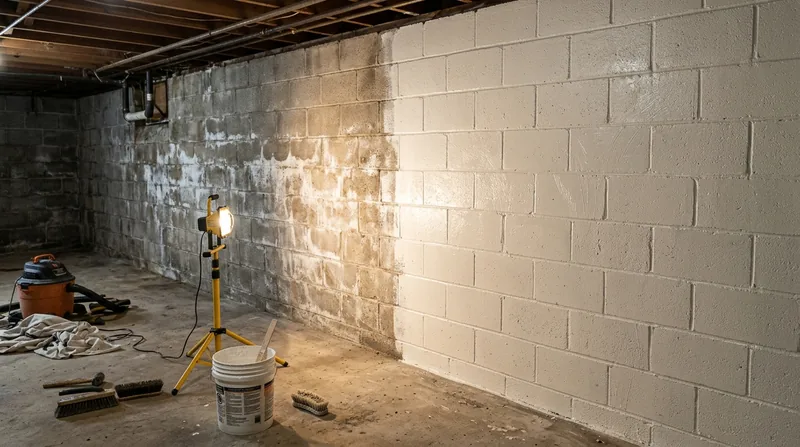




Basement Wall Sealing in Suffolk: Where Damp Brick and Block Meet a High Water Table
Suffolk sits on flat coastal plain ground, sandy loam over clay, with the water table only a few feet down and slow drainage toward the Nansemond, Elizabeth and Blackwater rivers. That means Basement Wall Sealing in Suffolk is rarely about a cosmetic upgrade. It is about stopping the dampness that shows up as efflorescence on brick and block walls, a musty smell in the stairwell, and paint that bubbles off within a season. Downtown and along the old rail corridor, 1900s-1940s frame and brick houses still have cellars and partial basements of brick and block, and those walls wick groundwater all summer. In Driver, Holy Neck and Chuckatuck, 1950s-1970s brick ranches mostly sit on slab or raised piers, so the wall sealing work there is concentrated on the few partial basements and on foundation walls that meet grade. We are a dedicated below-grade specialist, not a general foundation firm and not a plumber, and we tell you plainly when a sealer will solve the problem and when hydrostatic pressure means you need drainage instead. Start with a free basement inspection so we can read the wall before anyone sells you a coating.
Why Wall Sealing Matters on Suffolk's Low, Slow-Draining Ground
Most of the seepage we see in Suffolk is not a crack problem, it is a moisture-load problem. The clay layer under the sandy loam holds water, the water table rises after a heavy summer thunderstorm, and tidal backwater pushes into low streets during nor'easters and hurricanes. Brick and block walls absorb that moisture, then release it inward as vapor and outward as efflorescence. A penetrating sealer slows the vapor drive and stops the surface dusting; a membrane sealer bridges hairline porosity. Neither one holds back standing water under pressure, and we say so before we quote.
- We remove efflorescence and old failing paint so the sealer bonds to masonry, not to salt crust.
- We test for active moisture and map where the dampness actually enters the wall.
- We separate true wall seepage from a crack, a window well leak, or a failed footing drain.
- We recommend drainage when the wall is wet at the base and dry at the top, which points to hydrostatic pressure.
That diagnostic step is what keeps a wall sealing job from becoming a repeat call next spring.
Key info: A homeowner in Chuckatuck had white powder blooming across a block wall every July. The wall was damp, not leaking. Cleaning and sealing solved it. A house near the Nansemond River with the same powder had water standing at the wall base after storms, and that one needed drainage, not a sealer.
For the official word on what work needs a permit in the city, check the City of Suffolk building department before scheduling structural or drainage changes.
How We Seal Basement Walls in Suffolk, Step by Step
Our process is built around the fact that most Suffolk basements are small, old, and have one or two walls that take the groundwater hit. We do not seal a whole basement blind. We find the wet wall, prep it properly, and seal what will actually hold. If the inspection shows a structural crack or a bowing wall, we stop and route you to the right repair instead of coating over a moving wall.
- We walk the basement and grade, check downspout extensions, and note where the water table sits against the wall.
- We scrape, wire-brush, and wash the masonry to remove efflorescence, loose parging, and failing paint.
- We patch voids and honeycombed mortar joints so the sealer has a sound substrate.
- We apply a penetrating sealer for damp masonry or a membrane sealer where surface porosity is the issue.
- We correct grading and downspout discharge on the outside so the wall is not fighting the same water next season.
Every job ends with a moisture check and a plain explanation of what the sealer can and cannot do.
Key info: On a 1930s brick cellar near downtown Suffolk, the rear wall was damp and dusting but sound. We cleaned it, patched the mortar joints, and applied a penetrating sealer. The front wall had a vertical crack with active seepage, so we referred that section to foundation crack repair rather than sealing over it.
Sealing Approaches We Use and When Each One Fits
Not every damp wall needs the same product, and the right choice depends on the masonry, the moisture source, and whether the wall is structural or just a barrier. This table shows how we match the approach to the condition we find in Suffolk basements.
| Approach | Description | Best for |
|---|---|---|
| Penetrating sealer | Soaks into brick and block pores and reacts with the masonry to block vapor drive without a surface film. | Damp, dusting walls with efflorescence and no standing water at the base. |
| Membrane sealer | Builds a flexible coating over the wall face to bridge hairline porosity and minor surface defects. | Porous block walls and parged surfaces that stay damp after rain. |
| Crystalline waterproof coating | Grows crystals into damp concrete and block to seal capillary paths from the inside face. | Concrete and block walls with slow capillary seepage and no structural movement. |
| Parging repair plus sealer | Rebuilds failed mortar and parging, then seals the repaired surface so the coating has sound backing. | Older brick cellars downtown where the mortar has eroded and the face is crumbling. |
| Drainage referral | When pressure is the cause, we route the wall to an interior perimeter drain instead of sealing it. | Walls wet at the base after storms, with a high water table or tidal backwater nearby. |
The honest answer on a wall that stays wet under pressure is drainage first, sealer second, and we will tell you which one you are looking at.
Basement Wall Sealing Cost in Suffolk: What to Expect
Pricing for wall sealing in Suffolk starts at $1,500 for a focused job: one damp wall, proper cleaning, efflorescence removal, and a penetrating or membrane sealer. A full partial basement of brick and block, with failed parging to rebuild and several walls to prep, runs higher. What moves the number is wall length and height, how much prep the masonry needs, whether we have to remove old paint or a failing coating, and whether grading and downspout corrections are part of the scope. Access matters too: a low cellar with a narrow stair is slower to work in than a walkout on the water.
Getting two or three estimates is smart because the diagnosis matters more than the price. A quote that sells a sealer for a hydrostatic pressure problem is money spent twice. Ask each contractor what they found, how they tested for moisture, and what they would do if the sealer does not hold. Compare scope, not just the bottom line, and read our full pricing overview before you call around.
Choosing a Basement Wall Sealing Contractor Near Suffolk
Hiring for below-grade work near Suffolk means checking a few things that a general handyman cannot answer. Ask whether the company is licensed and insured, whether the crew does waterproofing as its main trade, and whether they will put the diagnosis in writing. Ask for local references, especially on brick cellars or block walls similar to yours. And ask who pulls the permit if the job touches structural repair or alters drainage, because the City of Suffolk building department sets those thresholds and they vary by jurisdiction.
- Confirm the company carries current liability insurance and workers' compensation, and ask for a certificate.
- Get two or three written estimates that describe the prep steps, not just the product name.
- Ask for references from Suffolk or Chesapeake jobs with the same wall type and moisture condition.
- Check HOA rules before any exterior grading or discharge change if you live in a Harbour View subdivision.
- Verify the permit requirement with the city before structural or drainage work begins.
A contractor who answers those questions clearly is the one you want on a below-grade job. When you are ready to talk, contact us for a free estimate and we will walk the wall with you.
Basement Wall Sealing in Suffolk: Pricing Guide
| Service | Price | Details |
|---|---|---|
| Single wall sealing | Starting at $1,500 | Cleaning, efflorescence removal, and sealer on one damp wall; prep level moves the price. |
| Multiple wall sealing | Starting at $2,400 | Two or three walls with patchwork and sealer; wall length and height drive the range. |
| Full partial basement | On estimate | Parging repair, full prep, and sealing across all walls needs an on-site look. |
| Travel | Included | In Suffolk and surrounding areas, no separate call-out or mileage fee. |
| Estimate | Free | Response within 24h at (757) 538-6013, no obligation to book. |
Indicative pricing, the exact cost depends on square footage, finish, and site access. Free personalized estimate within 24h at (757) 538-6013.


