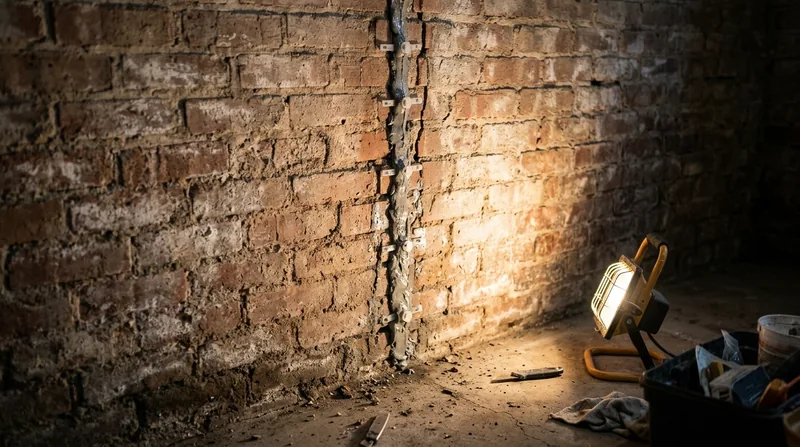




If you have a crack in your foundation wall in Suffolk, you already know the routine: a hairline at first, then a brown stain on the block, then a wet patch after every summer thunderstorm. Foundation crack repair in Suffolk is our specialty, and we do it the way this ground demands. Suffolk sits on flat coastal plain, sandy loam over clay, with a water table only a few feet down. Full basements are rare here, so most of what we repair are cracks in brick and block walls of 1900s-1940s houses downtown and along the old rail corridor, plus the slab and raised pier foundations of 1950s-1970s brick ranches in Driver, Holy Neck and Chuckatuck. When the Nansemond backs up during a nor'easter, hydrostatic pressure pushes water through every seam. We inspect the crack, match it to the right method (epoxy injection, polyurethane injection, or structural repair), and stop the leak at the source. Call (757) 538-6013 for a free inspection, or start with our free basement inspection page.
Why Foundation Cracks Open Up in Suffolk's Clay and Tidal Ground
Suffolk's soil holds water. Sandy loam on top, clay underneath, and the water table sits close enough that a heavy July thunderstorm can raise it against your footing in hours. That is hydrostatic pressure, and it finds every cold joint, every block mortar line, every shrinkage crack. Add the tidal backwater that rises into low streets near the Nansemond, Elizabeth and Blackwater rivers during hurricanes, and the wall gets pushed from both sides. The cracks we see most are these:
- Shrinkage cracks in poured walls and block mortar, usually vertical or stair-stepped, common in 1990s-2010s slab subdivisions in Harbour View.
- Hydrostatic seepage cracks that weep after rain, with white efflorescence blooming on the block face.
- Settlement cracks near the corners of older brick cellars downtown, where the footing has moved.
- Horizontal cracks on bowing walls, where wet soil is pulling the wall inward and simple sealing is not enough.
We tell you plainly which one you have. A hairline shrinkage crack that stays dry may only need sealing. A weeping crack under pressure needs injection. A horizontal crack on a bowing wall needs a structural conversation, not a patch.
Key info: A homeowner in Chuckatuck called us about a stair-step crack in a 1968 brick ranch after a nor'easter pushed water up through the slab edge. The crack was dry most of the year but wept for three days after the storm. That pattern points to hydrostatic pressure, and we treated it as such rather than as a simple patch.
Before you spend a dollar on crack repair, know which failure mode you are dealing with. The Virginia Department of Professional and Occupational Regulation keeps the contractor licensing lookup for our trade at dpor.virginia.gov, and it is worth a look before you hire anyone.
How We Repair a Foundation Crack in Suffolk, Step by Step
Every crack gets inspected before it gets a method. We look at width, direction, moisture, efflorescence, and whether the wall is moving. Then we choose the repair that fits, not the one that is easiest to sell. Here is the sequence we run on a typical injection job in Suffolk:
- We map the crack and check for active water with a moisture meter and a visual read of the block face.
- We clean the crack and drill injection ports at intervals along its length.
- We flush the crack with water or air to confirm it is open and clear of debris.
- We seal the surface with an epoxy paste so the resin stays in the crack and not on the floor.
- We inject epoxy for structural cracks or polyurethane for active leaks, starting at the lowest port and working up.
- We let the resin cure, cut the ports flush, and check the wall for any remaining seepage.
- We correct the water source outside where needed, with grading, downspout extensions, or a French drain to move roof and surface water away from the footing.
If the crack is part of a larger water problem, we say so and point you to the right system instead of sealing the same wall twice.
Key info: On a 1920s brick cellar off the old rail corridor in downtown Suffolk, the crack ran from the floor to the sill and wept after every storm. Epoxy injection alone would have failed because the water was still pushing. We injected the crack and corrected the grading and downspouts on the alley side, and the wall has stayed dry through two hurricane seasons.
When the crack is only one symptom of a wet perimeter, the better answer is often an interior drain tile system that relieves the pressure before it reaches the wall.
Crack Repair Methods We Use and When Each One Fits
Not every crack gets the same treatment. The table below shows the four approaches we use most in Suffolk and the conditions each one is built for. We pick based on crack width, whether water is active, and whether the wall is moving.
| Approach | Description | Best for |
|---|---|---|
| Epoxy injection | Structural resin injected into the crack under pressure, bonds the two faces back together | Non-structural shrinkage and settlement cracks that are not actively weeping |
| Polyurethane injection | Flexible foam resin that expands and cures in the presence of water | Active leaks and cracks that weep after rain |
| Surface sealing and parging | Hydraulic cement or membrane over a cleaned crack face | Hairline cracks with no active water and no wall movement |
| Carbon fiber straps or wall anchors | Structural reinforcement that resists inward soil pressure on a bowing wall | Horizontal cracks and walls that are moving inward |
If you see a horizontal crack with a bulge, stop treating it as a leak and get it looked at as a structural issue.
Foundation Crack Repair Cost in Suffolk: What to Expect
Most single-crack injection jobs in Suffolk start around From $450. That figure covers the inspection, port drilling, surface seal, resin, and cleanup on a typical vertical or stair-step crack. The price moves up with crack length, number of cracks, access, and whether the wall is moving. A hairline in a Harbour View slab wall is a different job from a full-height cellar crack in a 1920s brick house downtown.
Factors that affect the number:
- The length and number of cracks, since each one needs its own ports and resin.
- Whether the crack is active, which may call for polyurethane instead of epoxy.
- Access to the wall, especially in tight cellars and along finished basement walls.
- Whether structural reinforcement (carbon fiber straps or wall anchors) is needed on a bowing wall.
- Whether outside work is required, such as grading, downspout extensions, or a French drain.
Get two or three written estimates and compare scope, not just the number. A low bid that skips the water source will cost you twice. Our full pricing overview is at suffolk-va-waterproofing.com/pricing.
Foundation Crack Repair Near Me: How to Choose a Contractor Near Suffolk
You want a specialist who works below grade every day, not a general handyman with a caulk gun. Ask for the license and insurance certificate, get at least two written estimates, and call references from jobs in Suffolk, Chesapeake or Portsmouth. Ask whether a permit is required, because structural foundation repair and any work that alters drainage or the sanitary connection of a sump discharge may need one, and the threshold varies by jurisdiction. Always confirm with the local building department before work starts.
- Confirm the contractor is licensed and insured, and ask for the certificate in writing.
- Get two or three estimates that describe the method, not just a price.
- Ask for references on jobs similar to yours, especially older brick or block walls.
- Check whether a permit is required for structural repair or drainage changes with the city or county building department.
- Read the warranty terms and confirm they are transferable to the next owner.
If a contractor cannot explain why one method fits your crack and another does not, keep looking. You can reach us through the contact page or call (757) 538-6013 to book a free inspection.
Foundation Crack Repair in Suffolk: Pricing Guide
| Service | Price | Details |
|---|---|---|
| Single crack, epoxy injection | Starting at $450 | Includes inspection, port drilling, surface seal, resin and cleanup on one non-structural crack |
| Active leak, polyurethane injection | Starting at $550 | Flexible foam resin for cracks that weep after rain, priced by length and number of ports |
| Multiple cracks or full wall | On estimate | Needs an on-site look to count cracks, check access and confirm whether structural reinforcement is required |
| Bowing wall with horizontal crack | On estimate | Carbon fiber straps or wall anchors priced after inspection of wall movement and soil pressure |
| Travel | Included | in Suffolk and surrounding areas, no separate call-out or mileage fee |
| Estimate | Free | Response within 24h at (757) 538-6013, no obligation to book |
Indicative pricing, the exact cost depends on square footage, finish, and site access. Free personalized estimate within 24h at (757) 538-6013.


