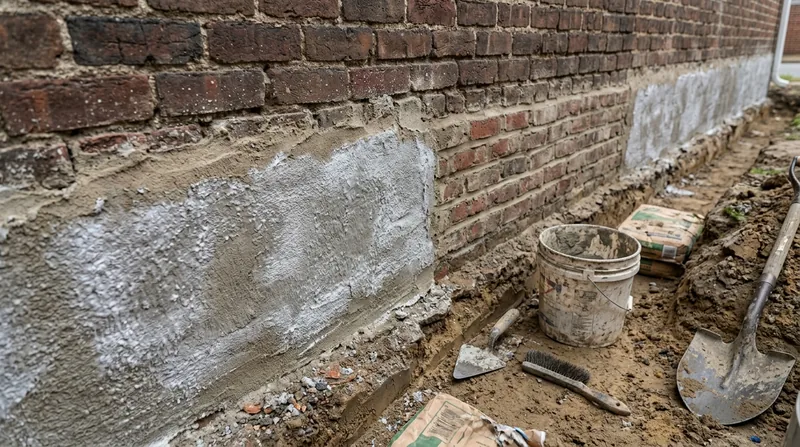




Suffolk sits on flat coastal plain ground where sandy loam rests over clay, and the water table stays only a few feet below grade. That means Foundation Waterproofing in Suffolk is rarely about a deep, dramatic leak. It is about slow, steady moisture finding its way through brick, block, and poured walls that were never designed for the groundwater pressure this region delivers. From the older frame and brick houses downtown and along the old rail corridor to the slab and pier foundations in Driver, Holy Neck, and Chuckatuck, the failure modes differ, but the fix starts in the same place: understanding how water moves under your house.
We work below grade only, and we tell you plainly when a crack is cosmetic and when it is a symptom of hydrostatic pressure that needs drainage, not just sealer. If you want the broader picture of how we approach wet basements here, start with our basement waterproofing service page.
Why Foundation Waterproofing Matters on Suffolk's Flat, Wet Ground
In Suffolk, water does not run off quickly. The ground is flat, drainage toward the Nansemond, Elizabeth, and Blackwater rivers is slow, and tidal backwater pushes into low streets during nor'easters and hurricanes. Summers bring heavy thunderstorms that dump inches in an hour, and the clay layer under the sandy loam holds that water against your foundation instead of letting it percolate away.
- Hydrostatic pressure builds against block and brick walls and forces water through mortar joints and hairline cracks.
- Efflorescence, the white chalky stain on basement walls, tells you water is moving through the masonry and evaporating on the surface.
- Downspouts that discharge too close to the footing saturate the soil right where the drain tile used to work.
- Older brick cellars downtown and block foundations in the 1950s ranches take on water differently and need methods matched to their age.
Ignoring these signs lets a small seep become a wet floor, a musty smell, and eventually mold growth on framing and stored materials.
Key info: A homeowner in Chuckatuck called us after every summer storm left a film of water on the basement slab. The crack was minor; the real problem was a downspout dumping onto the same corner for twenty years. Grading correction and a proper discharge extension solved it without excavation.
If you want to check what your local jurisdiction requires before structural work begins, the City of Suffolk building department is the authority to call, and rules vary by jurisdiction.
How We Diagnose and Waterproof a Suffolk Foundation
We start by finding where the water actually enters, not where the stain appears. That means walking the exterior grade, checking downspout discharge, reading the wall for efflorescence and crack patterns, and testing whether the moisture is rising from the footing or pushing through the wall face. Only then do we recommend a method, because sealing a wall that is under hydrostatic pressure just traps water behind the coating.
- We inspect the interior wall surface and floor perimeter for seepage, efflorescence, and evidence of past patching.
- We check exterior grading, gutter discharge, and window well drainage on walkout lots near the Nansemond River.
- We identify the foundation type (brick, block, or poured) and map crack orientation to determine whether movement or pressure is the cause.
- We recommend the least invasive method that solves the actual problem, from epoxy injection to interior perimeter drainage.
- We explain what we found in plain terms and put the scope in writing before any work starts.
For homes where the wall itself is the main path, our basement wall sealing service covers parging, membrane, and crystalline treatments matched to the masonry.
Key info: A 1960s brick ranch in Driver had a horizontal crack at mid-wall and a damp band along the floor. We injected the crack with epoxy and corrected the grading on the uphill side. No interior drain was needed because the water was coming through the wall, not up through the footing.
Waterproofing Methods We Use and When Each One Fits
Not every wet wall needs the same treatment. The table below shows the main approaches we use on Suffolk foundations and the conditions each one addresses. We choose based on foundation type, crack pattern, and whether the water is entering through the wall or rising from below.
| Approach | Description | Best for |
|---|---|---|
| Epoxy injection | Structural-grade epoxy injected through ports to bond crack faces back together. | Non-moving shrinkage and settlement cracks in poured walls. |
| Polyurethane injection | Flexible foam that expands and seals active leaks in wet cracks. | Leaking cracks that move or are actively seeping. |
| Parging and membrane | Repair coat plus waterproof membrane applied to the exterior wall face. | Block and brick walls with surface deterioration. |
| Crystalline treatment | Cementitious coating that grows crystals into the masonry to block water. | Damp, porous block walls without a single clear crack. |
| Interior perimeter drain | Drain tile at the footing inside the basement, feeding a sump basin. | Water rising through the footing across the whole floor. |
When the diagnosis points to water under the slab rather than through the wall, we move to interior drain tile because it solves the pressure without digging up the yard.
Foundation Waterproofing Cost in Suffolk: What to Expect
Most foundation waterproofing work in Suffolk starts around $3,500, and that figure reflects the small full basements and partial cellars common here. The final number depends on the foundation type, the length of wall involved, whether drainage is part of the scope, and how accessible the work area is. A single crack injection in a Harbour View slab home is a very different job from a full interior perimeter drain in an older block cellar downtown.
- Foundation type and wall length drive the labor and material quantities.
- Access matters: tight side yards and finished basements slow the work and add cost.
- Drainage correction, sump installation, and grading are priced as part of the scope when needed.
- Active leaks and storm damage may require faster scheduling and temporary measures.
We recommend getting two or three written estimates so you can compare scope, not just price, and our pricing overview explains what each line item covers.
Finding a Foundation Waterproofing Contractor Near Me in Suffolk
Hiring the right contractor matters more than the method on the invoice. Ask for proof of licensing and insurance, get everything in writing, and check references from jobs similar to yours. Permits are commonly required for structural foundation repair and for work that alters drainage or the sanitary connection of a sump discharge, and thresholds vary by jurisdiction, so confirm with the local building department before work begins.
- Verify the contractor is licensed and insured and ask for a certificate before work starts.
- Get at least two or three written estimates that list the scope and the method.
- Ask for references from Suffolk jobs with the same foundation type as yours.
- Confirm who pulls the permit and whether your HOA has rules about exterior work or discharge lines.
When you are ready to talk through your situation, reach out through our contact page and we will schedule a free inspection.
Foundation Waterproofing in Suffolk: Pricing Guide
| Service | Price | Details |
|---|---|---|
| Crack injection (epoxy or polyurethane) | Starting at $3,500 | Includes port installation, injection, and sealing of a typical wall crack; length and activity level move the price. |
| Wall sealing and parging | Starting at $3,500 | Covers surface prep, parging repair, and membrane or crystalline coating; wall area and access drive the cost. |
| Interior perimeter drain with sump | On estimate | Requires an on-site look to measure wall length, sump location, and discharge route before pricing. |
| Grading and downspout correction | Starting at $3,500 | Includes regrading the problem side and extending discharge lines; yard access and soil volume affect the figure. |
| Travel | Included | in Suffolk and surrounding areas, no separate call-out or mileage fee |
| Estimate | Free | Response within 24h at (757) 538-6013, no obligation to book |
Indicative pricing, the exact cost depends on square footage, finish, and site access. Free personalized estimate within 24h at (757) 538-6013.


