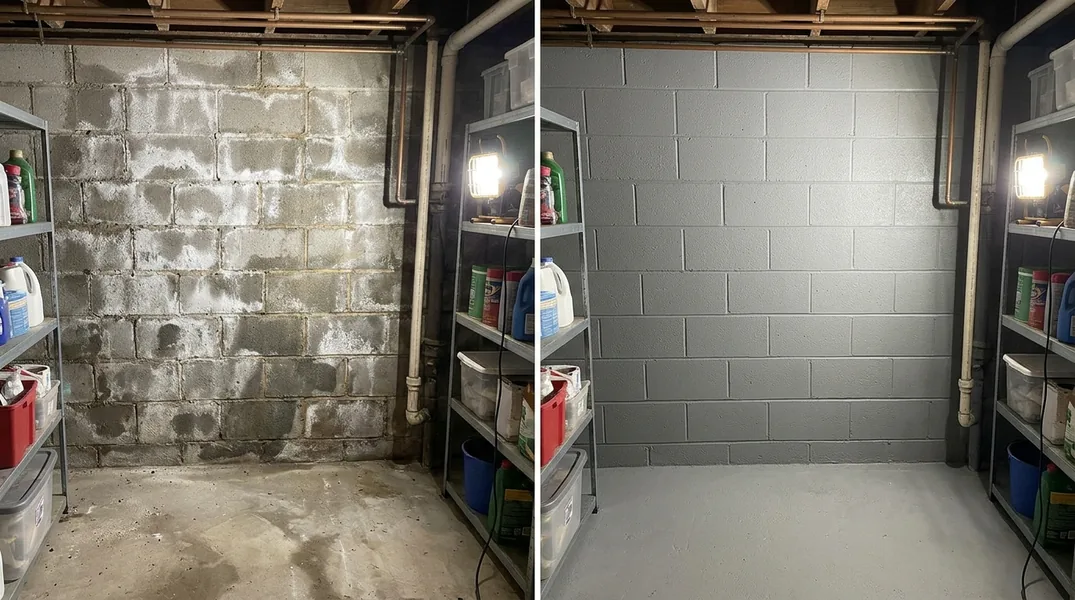
Why Suffolk Homes Face a Triple Flood Threat
Living in Suffolk means enjoying a mild climate, mature trees, and a strong sense of community. It also means living in a region where water arrives from three different directions. The first is the nor'easter, a coastal storm that can stall for days and drop several inches of rain on already saturated ground. The second is tidal backwater flooding, where high tides and storm surge push water up the Nansemond River and its tributaries, backing up drainage systems and raising water levels far inland. The third is the hurricane, which combines wind-driven rain with the potential for extended power outages and overwhelmed storm sewers.
Each of these events stresses a home in a different way, but they all end up in the same place: the basement and the foundation. When the ground cannot absorb any more water, that water seeks the path of least resistance, and often that path is through a foundation wall, a floor joint, or a window well. Understanding the threat is the first step toward real Suffolk VA flood protection. The second step is understanding how water actually gets in, because the fix is different for every pathway.
Tidal Backwater Flooding and the Rising Water Table
Tidal backwater flooding is one of the most misunderstood risks in the region. Homeowners often assume that if they are not directly on the water, they are safe. In reality, when the tide rises and storm surge pushes into the river system, the drainage ditches and storm pipes that normally carry rainwater away can fill and reverse. Water has nowhere to go, so it pools in low-lying neighborhoods and soaks into the soil for days. That prolonged saturation is what causes the most insidious damage: a rising water table basement situation where groundwater is literally pushed up against the underside of your foundation slab.
When the water table rises, hydrostatic pressure builds beneath the floor. That pressure can force water through hairline cracks, through the cove joint where the wall meets the floor, and even through porous concrete. You may never see standing water outside, yet your basement stays damp or develops puddles after every high tide event. This is why Basement Waterproofing in Suffolk has to account for groundwater, not just rainfall. A system that only manages roof runoff will fail when the water is coming up from below.
Hurricane Basement Flooding: What Actually Fails First
During a hurricane, the failure points tend to follow a predictable order. First, gutters and downspouts overload, dumping roof water right next to the foundation. Second, the soil around the foundation saturates and expands, widening existing cracks. Third, if the power goes out, a sump pump without battery backup stops running at the exact moment you need it most. That combination is what turns a manageable seep into hurricane basement flooding that ruins flooring, drywall, and stored belongings.
The good news is that each of these failure points can be addressed. Proper grading and downspout extensions move roof water away from the house. A battery backup or water-powered backup sump pump keeps the system running during an outage. And a professionally installed Interior Drain Tile System gives rising water a controlled path to a discharge point instead of letting it spread across the floor. For homeowners who want to stop water before it ever reaches the wall, Exterior Basement Waterproofing can redirect groundwater away from the foundation footing altogether.
Flood Prevention at Home: Practical Steps Before the Next Storm
Flood prevention home strategies start with the simple things a homeowner can inspect this weekend. Walk the perimeter of your house during a heavy rain and watch where water flows. If it pools against the foundation, regrade the soil so it slopes away at roughly six inches over the first ten feet. Clean gutters before storm season and add downspout extensions that discharge at least four to six feet from the wall. Check window wells for debris and make sure any covers are sealed. These low-cost steps reduce the volume of water that ever reaches your foundation.
Inside the basement, look for the warning signs that water is already finding a way in: white powdery efflorescence on the walls, rust stains at the base of appliances, a musty smell, or dark damp patches along the cove joint. Those signs mean it is time to bring in a professional for Foundation Waterproofing before the next nor'easter arrives. A proper evaluation looks at the soil, the grading, the drainage, and the foundation itself, then recommends a solution sized to your actual risk rather than a one-size-fits-all kit. If you are unsure where to start, a free estimate is the fastest way to get a clear picture of what your home needs.
Basement Waterproofing Near Me: Choosing a Local Suffolk Pro
Searching for basement waterproofing near me in Suffolk returns plenty of options, but not all of them understand the local water dynamics. A contractor who mostly works inland may not appreciate how tidal backwater affects a home near the Nansemond River, and a national franchise may not know which neighborhoods sit on poorly draining clay. A local company that works in Suffolk, Chesapeake, Portsmouth, and Franklin every week has seen how these storms actually behave and can tailor the solution accordingly.
When you interview contractors, ask specific questions. What is your approach to hydrostatic pressure? Do you offer battery backup on sump systems? How do you handle the cove joint? Will you provide a written scope and a transferable warranty? A knowledgeable pro will answer these without hesitation and will explain why a particular system fits your home. They should also be willing to walk you through the pricing clearly so you understand what you are paying for and what is included. If a quote feels vague, keep asking questions.
Basement Waterproofing Cost in Suffolk: What to Budget
Homeowners often ask what basement waterproofing costs in Suffolk, and the honest answer is that it depends on the source of the water, the size of the space, and the system required. A straightforward interior drain tile installation with a sump pump is typically less expensive than a full exterior excavation, because exterior work involves digging around the foundation and restoring the landscaping. A single crack injection is a minor repair, while a full perimeter system is a larger investment. Most reputable companies provide a written estimate after an on-site inspection so the number reflects your actual home rather than a phone guess.
It also helps to think about cost in terms of avoided damage. A finished basement ruined by hurricane flooding can cost far more to restore than the waterproofing system that would have prevented it, and many homeowner insurance policies exclude groundwater and flood damage. Budgeting for prevention is usually the smarter financial move. If you want a clear number for your home, call Suffolk Waterproofing at (757) 538-6013 or request a free estimate. A local specialist can inspect your foundation, explain the options, and help you protect your Suffolk home before the next storm season arrives.
Looking for a professional basement waterproofing contractor in Suffolk? Suffolk Waterproofing responds fast for all your basement waterproofing needs.
Get a Free QuoteOur services: Basement Waterproofing · Interior Drain Tile System · Exterior Basement Waterproofing